
Hayes County Civil Docket Searches
For a Hayes civil docket, the statewide entry point is the one-time Nebraska JUSTICE search. Pick Hayes County Court or Hayes District Court, then search with whatever is most precise. A case number beats everything. Without one, a full party name helps. Add the year plus the civil or small-claims type. Treat the hit list as an index only. Confirm the caption, court, case type, and party roles before trusting it.
JUSTICE returns plenty: case detail, parties, registers of actions, cost and payment data, and public document images where they exist. The one-time service costs $17 per search, even when nothing turns up. It covers three calendar days with up to 30 cases. Brand-new filings may lag by about 24 hours. Prefer a free option? The courthouse public terminal works too, subject to clerk-confirmed availability. The court clerk can then pull any case you identify there.
- Open JUSTICE and agree to its current terms before beginning.
- Select Hayes County Court or Hayes District Court, then add the case number or the most precise party and year details.
- Confirm the caption, party roles, case type, filing year, and court before opening detail.
- Read the register of actions in date order, then distinguish case events from a calendar setting.
- Request an identified public record or certified copy from the clerk when an official copy is needed.
Hayes Civil Docket Court Limits
Money sets the first dividing line in a Hayes County civil docket. Hayes County Court can hear civil cases up to $70,000. That limit runs from July 1, 2025 through June 30, 2030 under the Rule 6-1462 period. Treat that figure as dated rather than permanent. Anything above the cap belongs in Hayes District Court. So do matters that statute or subject matter assign to district jurisdiction. Money alone never settles where a case lands. Read the filing itself before assuming a court.
Small claims sit on the County Court side of the ledger. The statutory limit is $7,500 beginning July 1, 2025. Older Nebraska references may quote less, so trust current sources and the actual court forms over anything dated. Missing civil case? Before deciding it was never filed, check the District Court docket. Look at any appeal route, and ask the clerk.
Quick route: Hayes County Court handles lower-dollar civil matters and small claims within its jurisdiction. Hayes District Court handles above-threshold civil matters and subject-matter categories assigned to district court.
Civil Dockets: What They Show
Think of the civil register of actions as a timeline. It lists each filing, hearing, motion, order, judgment, and other case event in order. Beyond that chronology, a case record can include the case number, caption, case type, party roles, filing date, attorney field, judge, financial details, and any public images. For tracking the sequence of a case, the register beats a search-result list or a calendar entry every time.
| Case number and caption | The official identifier and title of the case. Use them to distinguish similarly named parties. |
|---|---|
| Parties and roles | Plaintiff or petitioner, defendant or respondent, and another listed role where displayed. |
| Register of actions | The dated civil docket events, including filing, service, hearing, motion, order, or judgment entries. |
| Judgment or order summary | A public summary where shown. It must be read with the register and the actual order. |
| Costs, payments, images | Information where available and public. It does not promise current payment status or every document. |
Rule 1-805 lists the categories of court records open to electronic public access, including litigant indexes, case summaries, party information, registers, available images, calendars, and summaries of judgments, orders, and decrees.
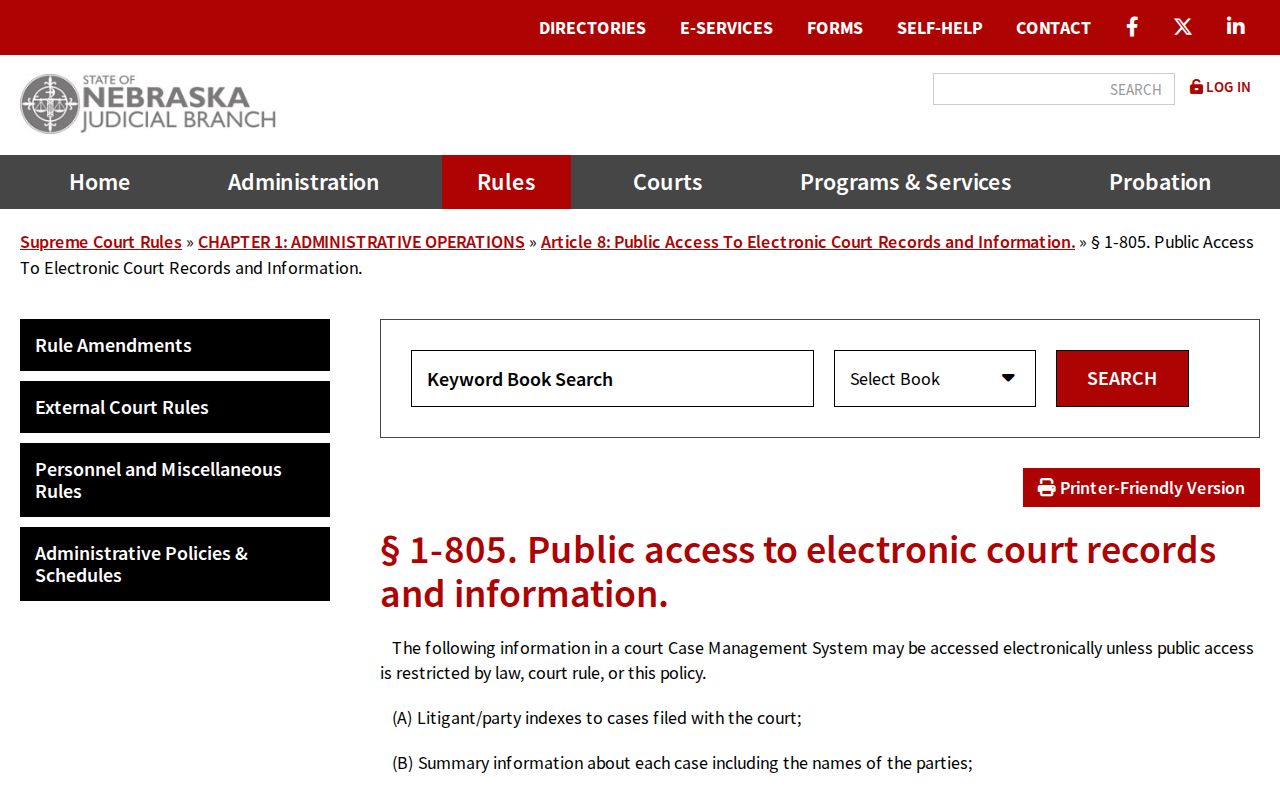
The rule names categories only. Whether a specific item actually displays depends on the individual record and its access rules.
Hayes Civil Docket Images
Nebraska Judicial Branch eFiling ties into both JUSTICE and SCCALES. Filings made electronically can show up as linked document images inside JUSTICE, with no added image charge under the current one-time service description. But images are not guaranteed. A document may lack a public image because it predates coverage, was never filed electronically, or is restricted.
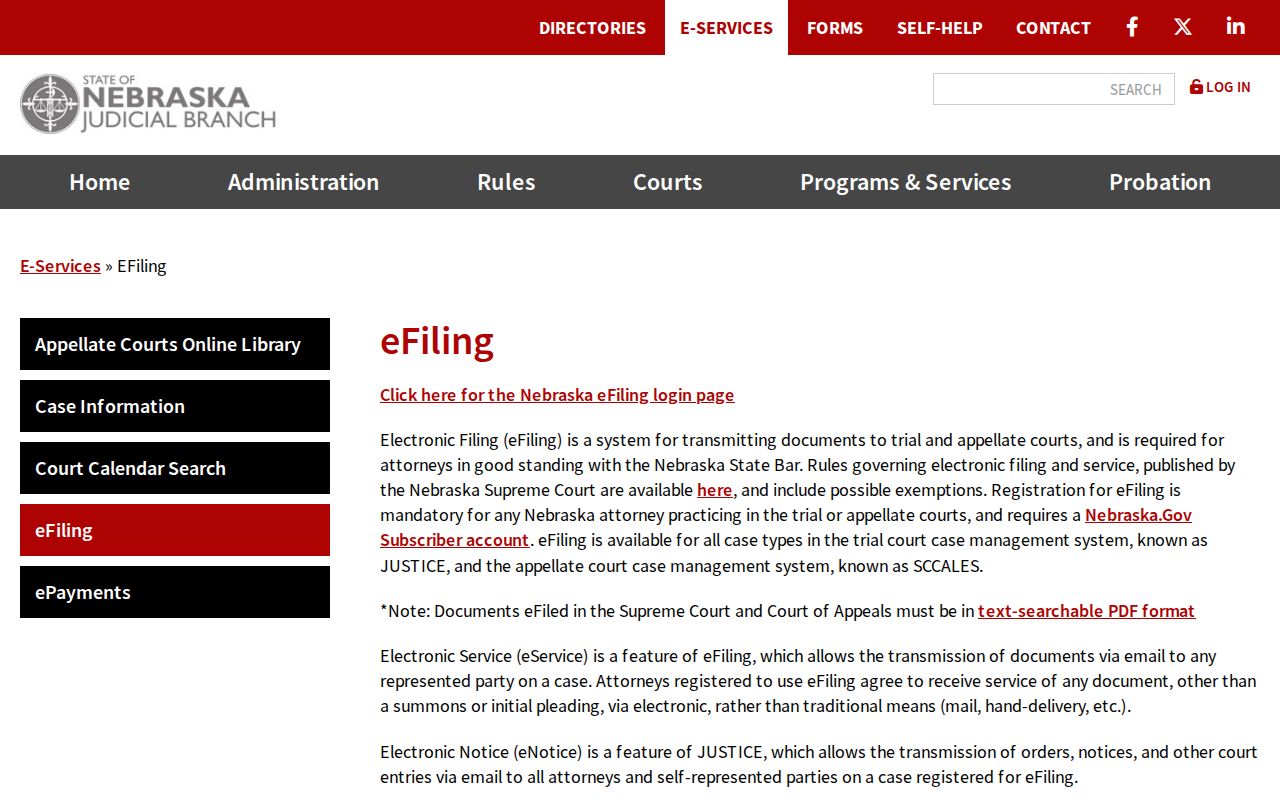
Keep two limits in mind. eFiling and eService are system functions, so a docket entry does not prove any party received a document or that a public image exists.
When an image is missing, or you need a certified copy, read the register for the order of entries and ask the clerk for the specific public document. That request is routine.
What Cases Fill the Civil Docket
What fills a Hayes civil docket depends on the court. County Court takes civil matters under its current jurisdictional limit plus small claims. District Court sits above that threshold. It also owns domestic-relations matters and anything else the law assigns to it. Probate, guardianship, conservatorship, and adoption run as separate county-court categories. Their place in the court system does not make every filing public. An ordinary civil record is not the same.
- County-court civil cases within the applicable limit.
- Small claims under the current $7,500 statutory limit.
- District-court civil actions above the county-court threshold.
- District-court domestic-relations cases, which can contain protected financial information.
- Special county-court categories such as probate or guardianship, subject to their own access rules.
A caption is just the court's title for the case. It never proves that a pleading's allegations are true. Read the record neutrally: begin with the verified filing, then the register and any public order.
Hayes Civil Docket Small Claims
Small claims simplify the civil route. They are still County Court business, with official forms, service rules, deadlines, and instructions from the court. The limit stands at $7,500, effective July 1, 2025. Expect a judgment, a payment entry, a satisfaction, or an appeal to appear. Each one shows up as its own docket event. No single entry tells the whole story; the register and judgment record together carry the status.
| Record type | Hayes court route | What to check |
|---|---|---|
| Small claims | County Court, subject to the $7,500 limit effective July 1, 2025. | Case type, party roles, register, judgment, and appeal-related entries. |
| Other civil case | County Court within the applicable limit or District Court for above-threshold and assigned matters. | Correct court, jurisdiction, caption, filing year, and register of actions. |
Scale is one thing the numbers do show. The FY2025 Hayes County Court report counts one small-claims case and 23 civil cases. Those totals identify no one. They also say nothing about whether any particular record is public.
Hayes Civil Docket Transfers
Civil cases in Hayes County sometimes switch courts. County Court and District Court both handle civil matters. Certification under Neb. Rev. Stat. §25-2706 does the moving work. It lets a case go from County Court up to District Court. That means the County Court docket you pull may be only part of the path. Later entries live in the District Court file. Appeals work the same way. An appealed case gets its own record. The Nebraska Court of Appeals uses SCCALES rather than JUSTICE for case information.
So when a Hayes case number comes up empty, don't stop. Check the other Hayes court, any appeal posture, and the clerk. The case number is the best tool for that. A court calendar can flag a pending hearing. It can't replace the register of actions for a transfer, an order, or the case chronology. The civil docket that first appears in a name search is not always the only one. More than one may exist.
Hearings on the Civil Docket
A hearing is just a scheduled proceeding. It is not a judgment or a final result. For a Hayes civil date search, open the Court Schedule, pick County Court or District Court, choose Hayes, and search by date or last name. The statewide calendar may list a case number, caption, date, time, and location. Match what it shows against the register of actions, a notice, an order, or a confirmation from the clerk. That comparison catches errors.
No result does not mean no court date. A setting can be continued, removed, changed, or left out of the statewide calendar data entirely. For a continued hearing or a final civil event, the register entry and the controlling order tell you far more than the calendar does.
Hayes Civil Docket Copy Requests
Start a copy request by naming the right court. Hayes County Court or Hayes District Court? Provide the case number if you have it. Without one, give the clerk the complete party name, the approximate year, the case type, caption detail, and the exact item sought, whether that is a register, judgment, order, full file, or specific pages. Say whether the copy must be certified. The County Court Clerk handles County Court civil and small-claims records at 308-286-3315, P.O. Box 370, Hayes Center, NE 69032. The District Court Clerk takes district civil records at 308-286-3413, 505 Troth Street, P.O. Box 370, Hayes Center, NE 69032. Clerks copy records you identify. They will not certify that no record exists.
The official CC 3:30 form is titled Invoice for File Copies or Certified Copies. It includes a Small Claims checkbox and lists 25 cents per page and $1 per seal. The form says nothing about Hayes turnaround time, delivery cost, payment method, identity requirement, or email procedure. Ask the clerk those questions before sending a request.
The current Judicial Branch fee schedule includes copy, certificate, and seal rows, and those lines can change the total for a particular certified request. A clerk can confirm what applies to your case.
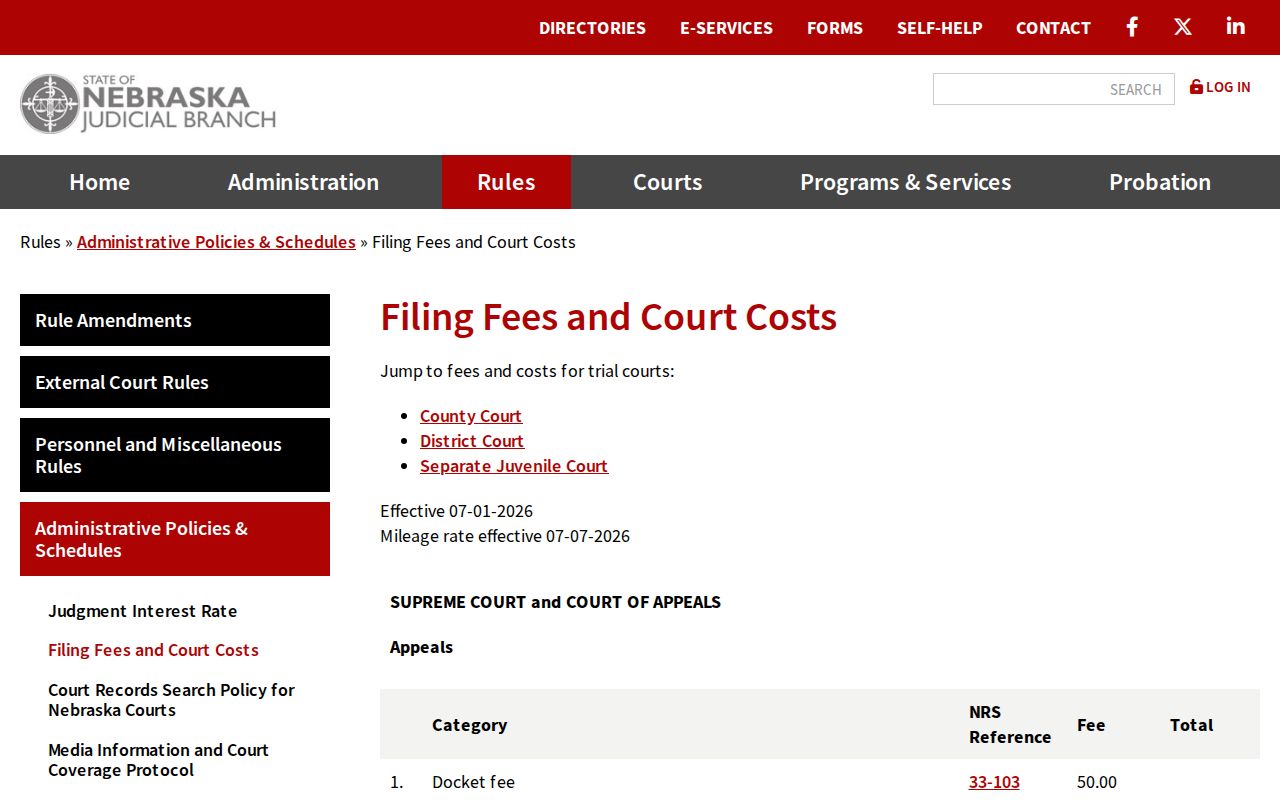
The total depends on the record and certification type. Because a certified request can carry charges beyond the basic copy or seal line, ask the clerk to confirm the current total.
Who Can See Civil Dockets
Nebraska public-records statutes favor access. They support examining and copying court records. But they do not override a sealing order or a court-specific restriction. Rule 1-808 lists records excluded from public access. Sealed files and adoption material sit on that list. A search result may surface the case itself. The document or a protected field can still be off limits. Ask the clerk about a redacted public portion. Don't assume an online result opens the whole file.
Rule 6-1521 is the main civil privacy rule. It covers birth dates, gender, Social Security numbers, financial-account numbers, and confidential material. The clerk need not inspect every filing for every protected field. So a public filing is not permission to copy or republish personal or financial data.
Access rules:
Rule 1-803 states Nebraska's general public-access principle for court records and information.
Rule 1-805 identifies the electronic categories that may be public.
Rule 1-808 addresses exclusions and the clerk's duty not to disclose them.
The Rule 6-1521 text sets out the civil record privacy protections.
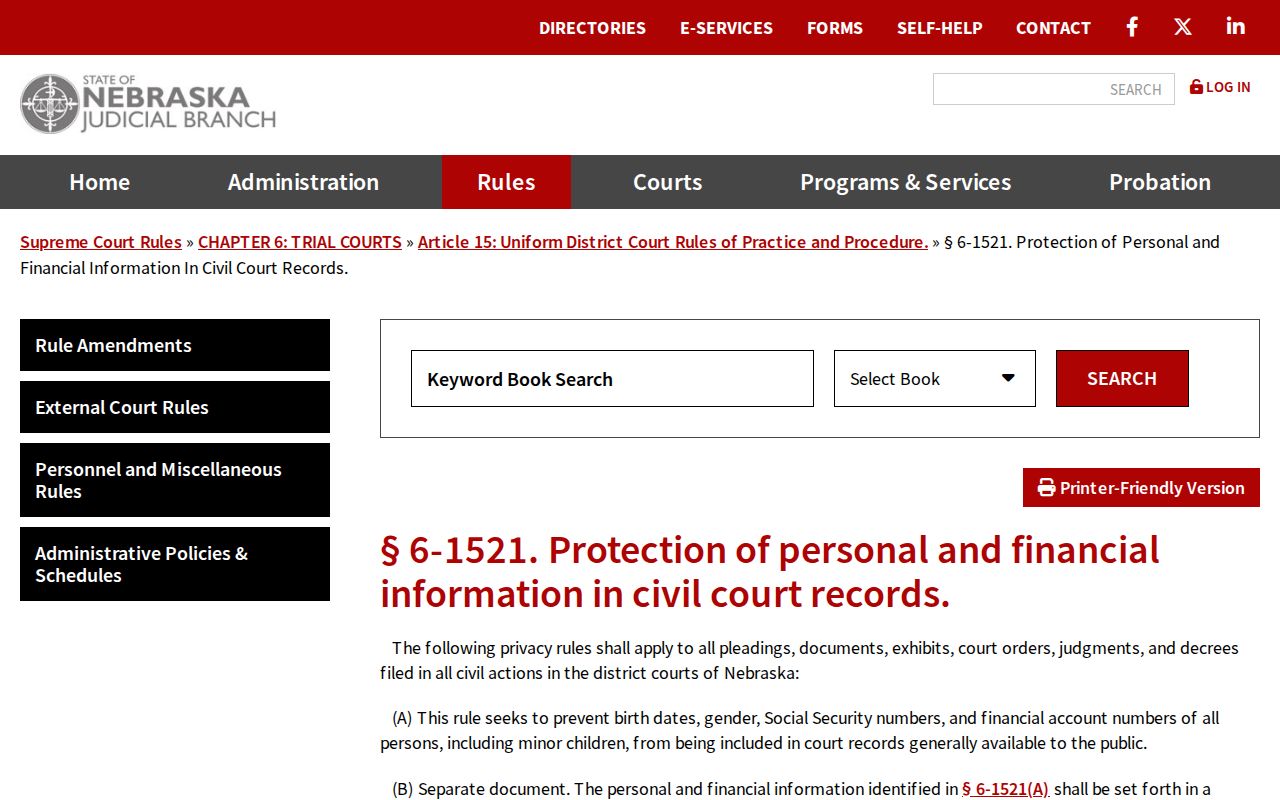
Protected details can be hidden or left out. They may sit in confidential material or drop from the public filing, and access always turns on the actual record and the controlling rule or order.